Most study plans are written forward: "Monday I'll do chapter 1, Tuesday chapter 2…" and they fall apart by Thursday, because forward plans assume every day goes perfectly and never say what to cut when it doesn't.
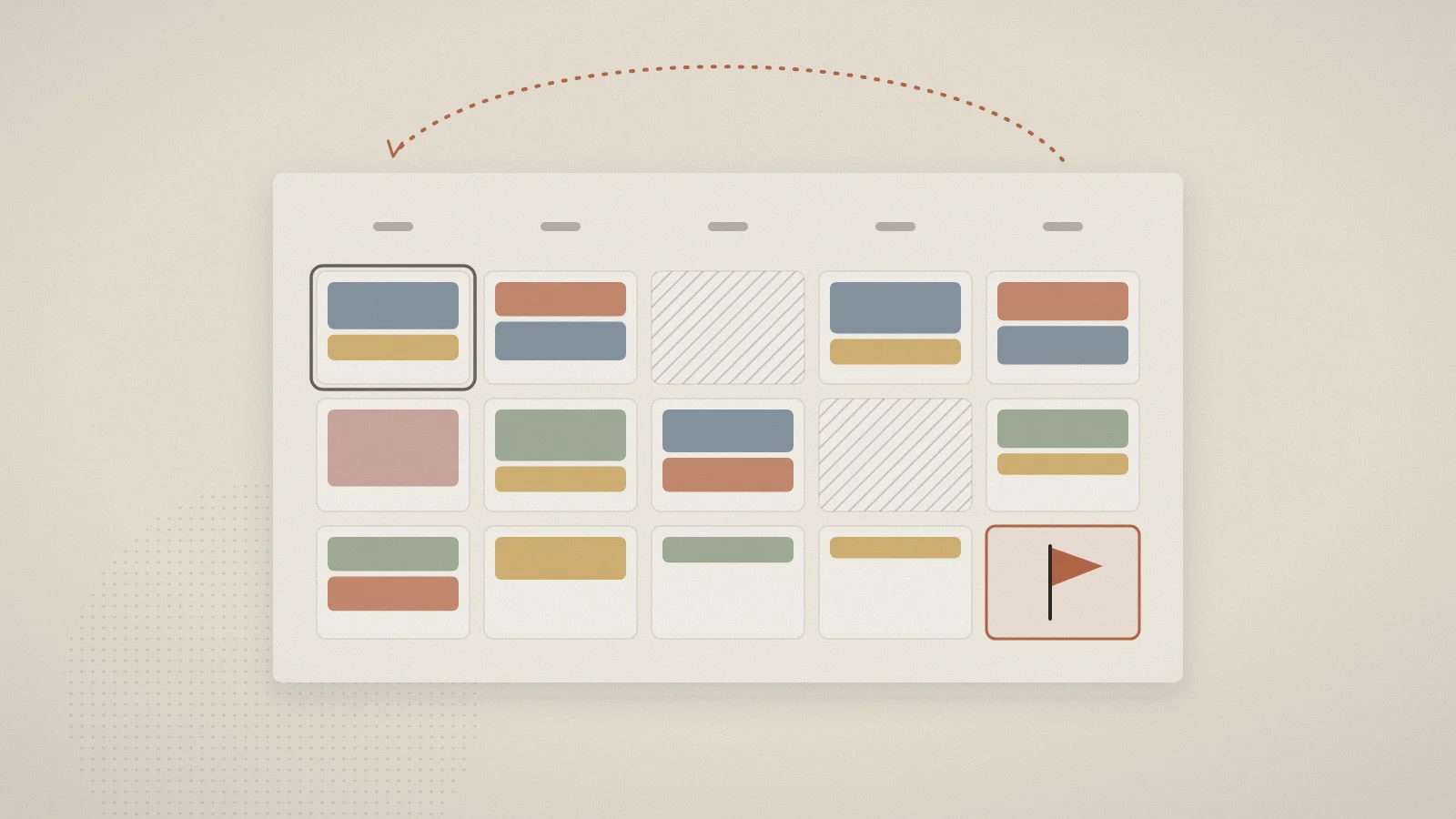
Planning backward fixes that. You start at the exam, decide what the last few days must look like, and work back toward today. Anything that doesn't fit becomes visible immediately - while you can still do something about it.
Why plans fail (and what the research says)
Two well-documented effects explain most collapsed study plans:
- The planning fallacy. People consistently underestimate how long tasks will take, even when they know similar tasks ran over in the past. In a classic 1994 study, Buehler, Griffin and Ross asked students to predict when they'd finish their theses; most finished well after their own "realistic" estimates.
- Vague intentions. "Study more this week" doesn't happen. Specific plans do. Research on implementation intentions - plans in the form "when X happens, I will do Y" - has found they substantially increase follow-through (Gollwitzer's work since the 1990s is the classic reference).
A good plan builds in slack for the first and is specific enough to beat the second.
Step 1: Put the fixed points on a calendar
Mark the exam date and everything that isn't negotiable before it: lectures, shifts, travel, other deadlines, the evenings you know you won't study. Be honest - a plan that assumes you'll study on your friend's birthday is a plan you'll break.
What's left is your real study time. Count it in minutes per day, not "free days." Forty-five focused minutes on a weekday is a more reliable unit than "Saturday."
Step 2: List the topics and size them
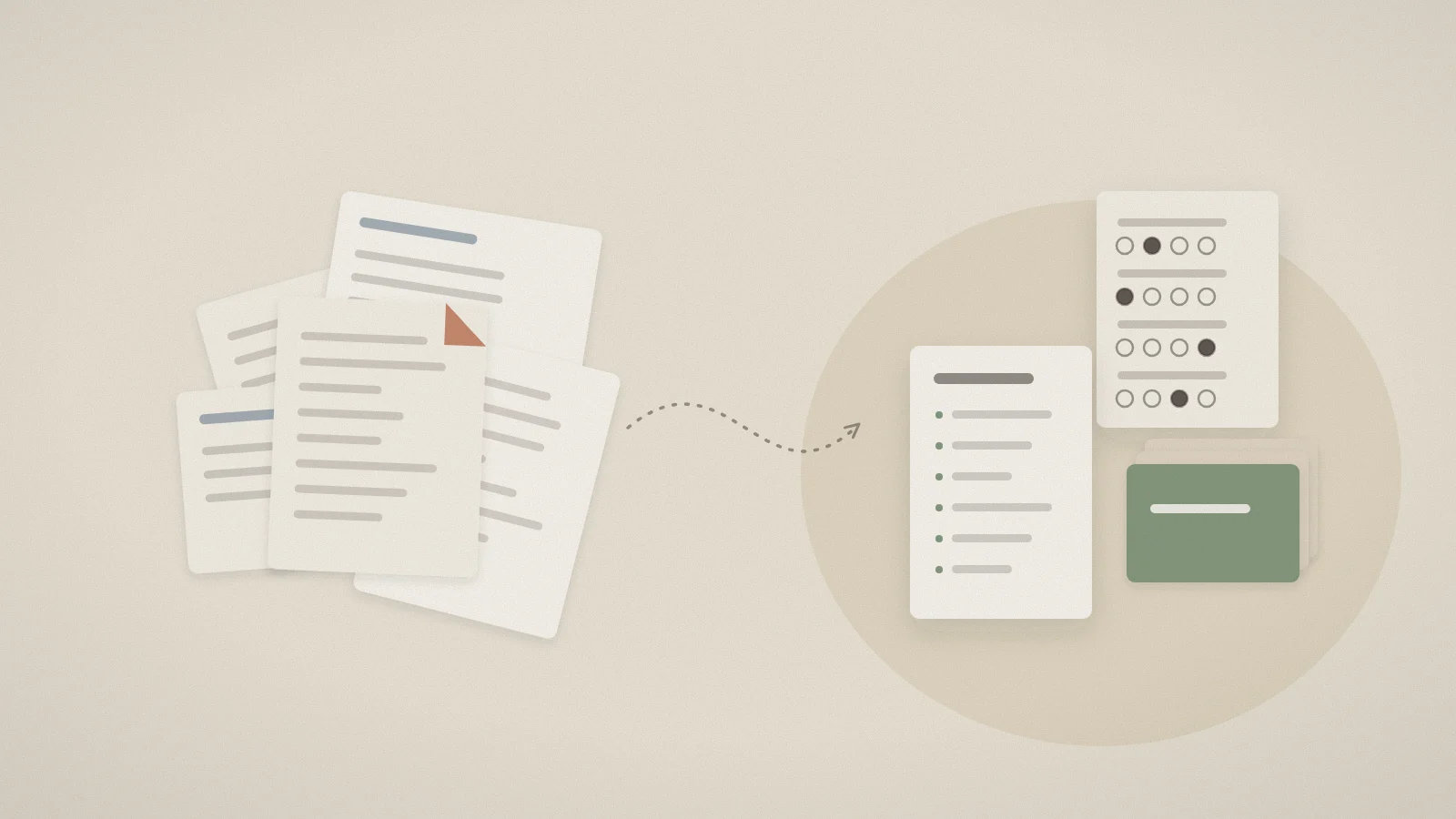
Write every topic the exam covers, then give each a rough size:
- S - you understand it; it just needs review.
- M - you've seen it but couldn't explain it.
- L - new to you, or you know you're shaky.
Now apply the planning fallacy correction: whatever total you get, add 25%. If that doesn't fit in your available time, you've learned something important on day one instead of the night before.
Step 3: Fill the calendar from the end
Work backward in this order:
- The last 1–2 days: light review only. Flashcards, your summary sheets, sleep. No new material.
- About a week out: a full mock exam under timed conditions. Early enough that you have days left to fix what it reveals.
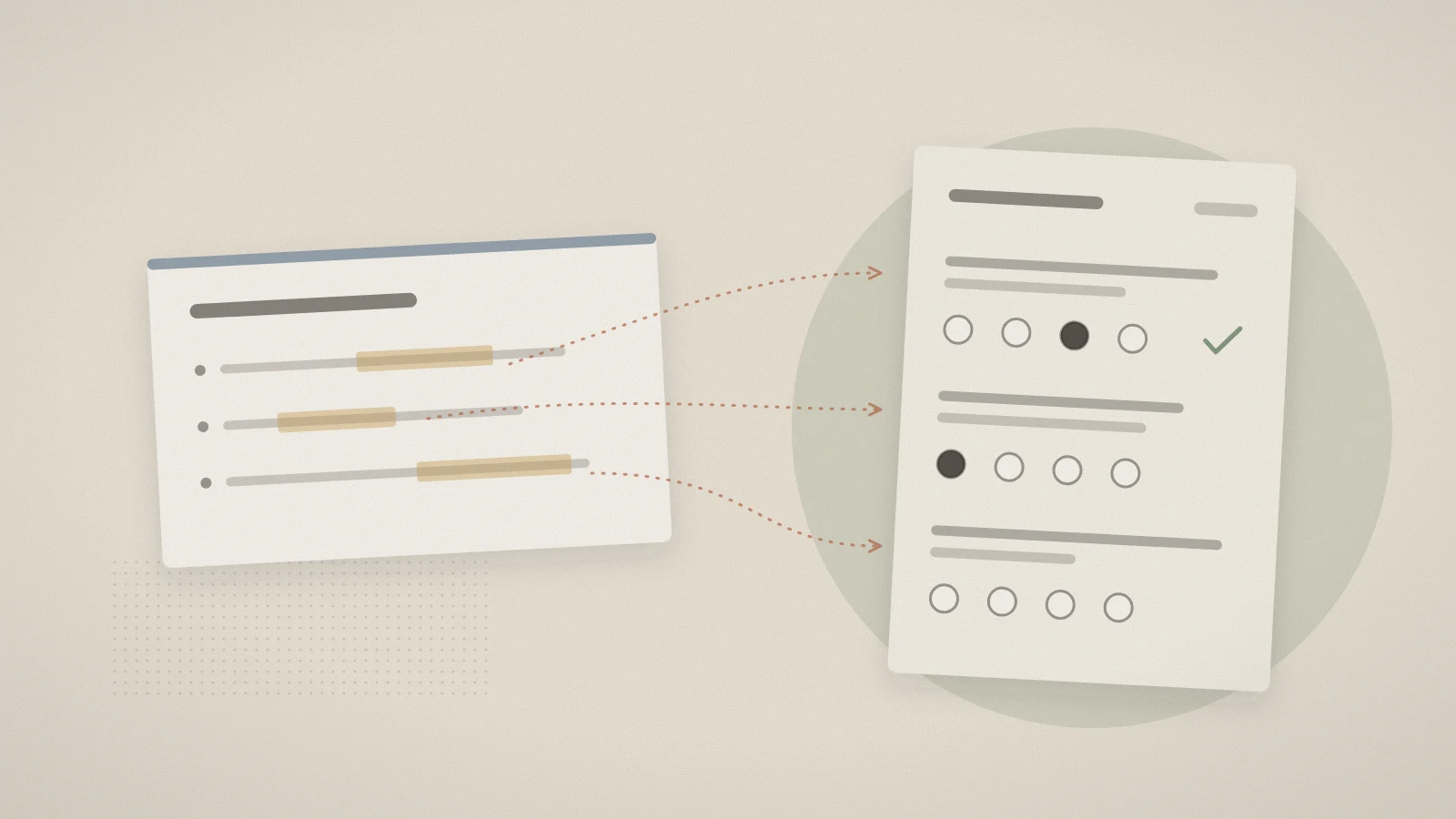
- The days after the mock: your weak topics, as revealed by the mock - not the ones you feel weak on.
- Everything before that: learn the L and M topics first, with short practice quizzes after each, and keep the S topics for light review.
Throughout, keep a small daily slot for spaced review of everything you've already covered. Ten to fifteen minutes is plenty.
Step 4: Make every session specific
For each block, write what and how, not just a subject name:
- Weak: "Biology, 45 min."
- Strong: "Read chapter 10 (25 min), then a 10-question quiz on chapters 9–10 (20 min)."
And attach it to a cue: "After dinner on Tuesday, at my desk, phone in the other room." That's an implementation intention, and it's the cheapest boost to follow-through there is.
A worked example: three weeks to a biology final
Here's what a backward plan looks like for an exam on a Friday, at 45 minutes a day with weekends off:
| Week | Focus | Typical day |
|---|---|---|
| Week 1 | Learn the new and shaky topics (L, M) | Read one chapter, then a short quiz on it; 10 min of flashcards |
| Week 2 | Finish learning, start mixing | Monday: full timed mock exam. Then work through the weak points it showed, with mixed quizzes across chapters |
| Week 3 | Consolidate | Mixed practice and flashcards; Thursday light review only; Friday: exam |
Notice that the mock exam sits a full week before the real one. That's the most common mistake in student plans: the practice exam is scheduled for the night before, when there's no time left to act on what it tells you.
Mixing chapters in week 2 is deliberate, too. Practicing several topics in one session feels harder than doing one at a time, but it trains you to recognize which idea a question is about. We wrote about why in interleaving: why mixing topics works better.
Step 5: Review the plan weekly - and cut, don't cram
Every week, spend ten minutes comparing the plan to reality. If you're behind, don't stack the missed sessions onto later days; that's how plans turn into all-nighters. Instead, cut: drop the lowest-value S-topic reviews, shorten the reading, protect the mock exam and the weak-topic days.
Letting software do the arithmetic
None of this needs special tools - a paper calendar works. But the arithmetic is tedious, especially across several subjects with different exam dates, and it has to be redone every time something slips.
If you'd rather not do it by hand, Skolight's AI study planner builds a schedule from your exam dates and the minutes you can study each day, keeps clear of days you mark as busy, and spreads sessions back from the deadline. And if you sit a mock exam in Skolight, you can turn the topics you got wrong into a revision plan in one step - the "work on what the mock showed" part of the method above.
Whichever way you build it, the principle is the same: decide what the last week looks like first, and let everything else fit around it.
The method in five lines
- Mark the exam and every fixed commitment; count real minutes per day.
- List and size the topics; add 25% to your estimate.
- Fill from the end: light final days, a mock a week out, weak topics after it, learning before that.
- Make each session specific, and tie it to a time and place.
- Review weekly. When behind, cut - don't cram.